

Nobel Lecture
The lecture series "BioTechMed-Graz Nobel Lecture" celebrates the outstanding contributions of Nobel laureates in the research fields of BioTechMed-Graz. Once a year, BioTechMed-Graz invites a Nobel laureate to give a lecture in Graz.
Nobel Lecture 2026
Date: Friday November 13, 2026, 5.00 p. m. - admission from 4.00 p. m.
Venue: University of Graz, Alumni Lecture Hall (Lecture Hall HS 62.01, Universitätsplatz 3a, ground floor).
Speaker: Christiane Nüsslein-Volhard, Nobel Laureate in Physiology or Medicine 1995 “for [..] discoveries concerning the genetic control of early embryonic development”
Title: Animal Beauty: Function and Evolution of Biological Aesthetics
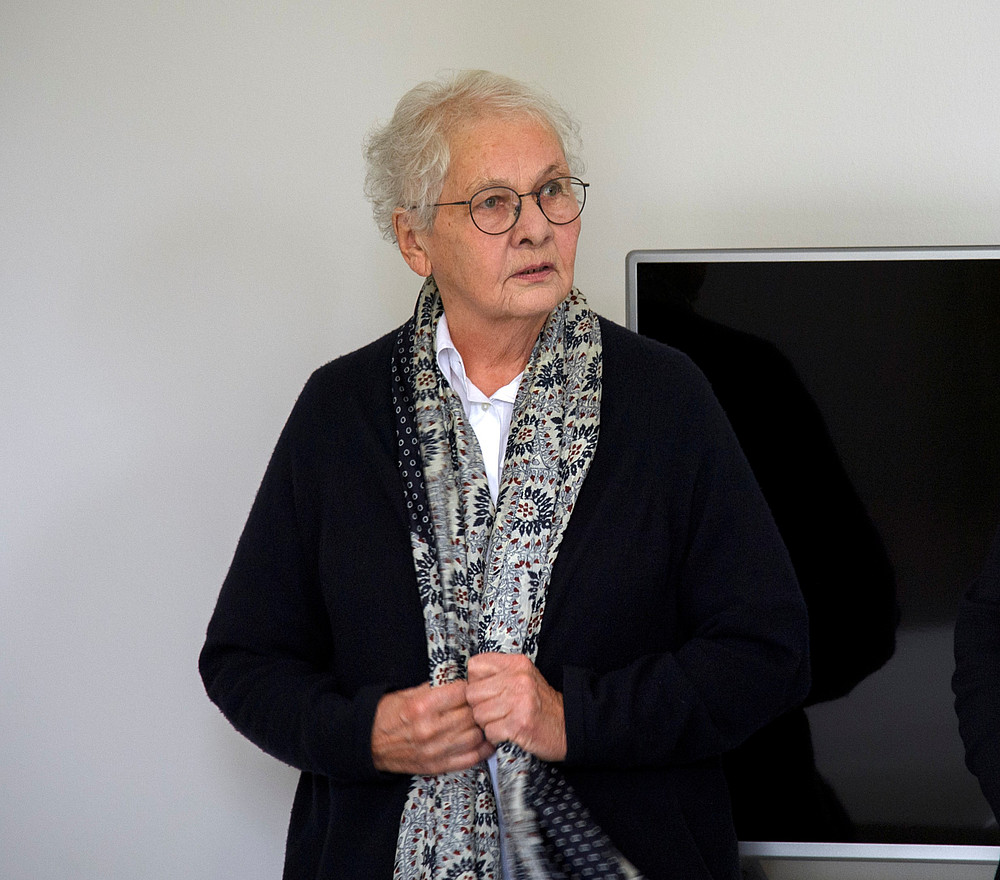
Abstract: Mankind finds the colours, the patterns and the songs of animals beautiful, just as we do works of art, paintings and music. Our works of art are created by humans for humans, but what about the wonderful works of nature, the ornaments and sounds of animals? Why and for whom are they there? How do they arise?
Animal colour patterns have important functions in communication among individuals of a species, for example recognition and selection of a mating partner, or attraction of many individuals to form large groups. Colour patterns also serve as deceptive signals that are recognized by individuals of different species. Moreover, colour patterns are highly variable and evolve rapidly leading to large diversities even within a single genus. In short, colour patterns are of high evolutionary relevance as targets of natural as well as sexual selection.
How insects, beetles, flies and butterflies develop their colours is reasonably well known, but in vertebrates many things about it are obscure. With mammals and birds, critical steps in the development of colour patterns are hidden either in the mother's belly or in the bird's egg. We do, however, now know a lot more about these processes in fish, which display a multitude of beautiful patterns composed of a mosaic of differently coloured cells in the skin. The characteristic stripe pattern of the zebrafish Danio rerio serves as a model for the development and evolution of animal colour patterns.
Registration
Registration for the lecture in the Alumni Lecture Hall
Registration for Childcare (only with valid registration for the lecture in the Alumni Lecture Hall)

Past Nobel Lectures
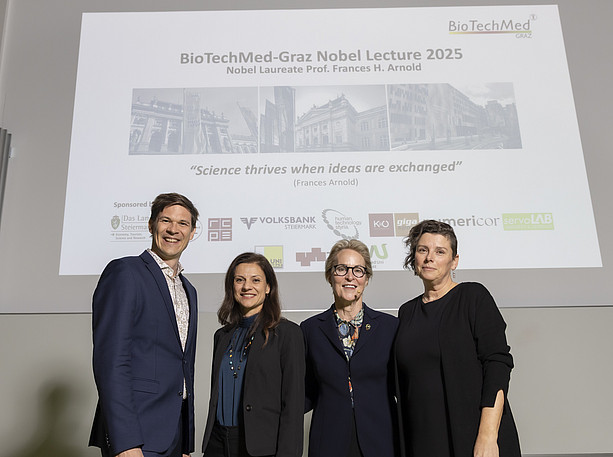
The 2018 Nobel Prize in Chemistry was awarded to Frances Arnold “for the directed evolution of enzymes.”
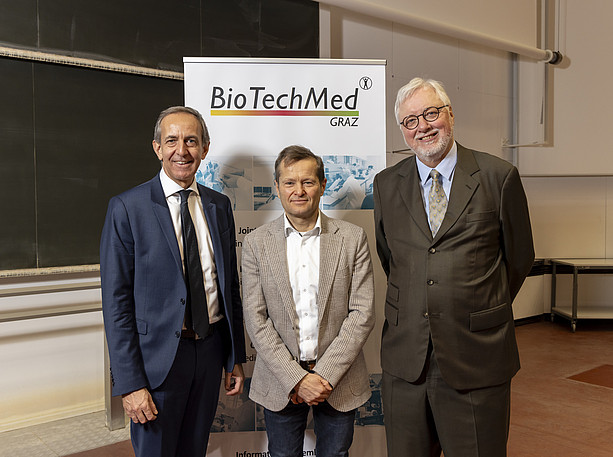
The Nobel Prize in Physics 2023 was awarded to Pierre Agostini, Ferenc Krausz and Anne L’Huillier "for experimental methods that generate attosecond pulses of light for the study of electron dynamics in matter"
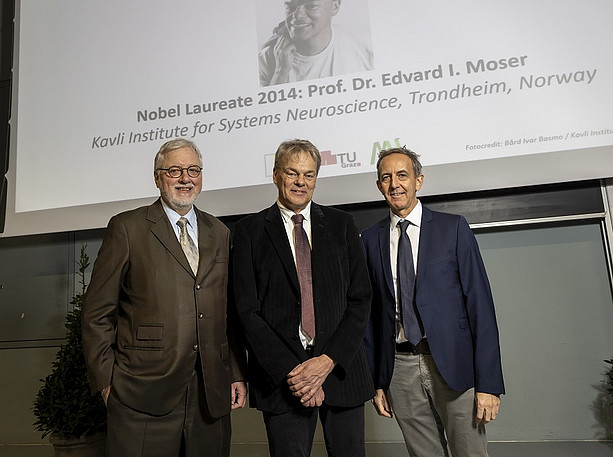
The 2014 Nobel Prize in Physiology or Medicine was shared, with one half going jointly to May-Britt Moser and Edvard I. Moser and the other half to John O'Keefe "for their discoveries of cells that form a localization system in the brain".
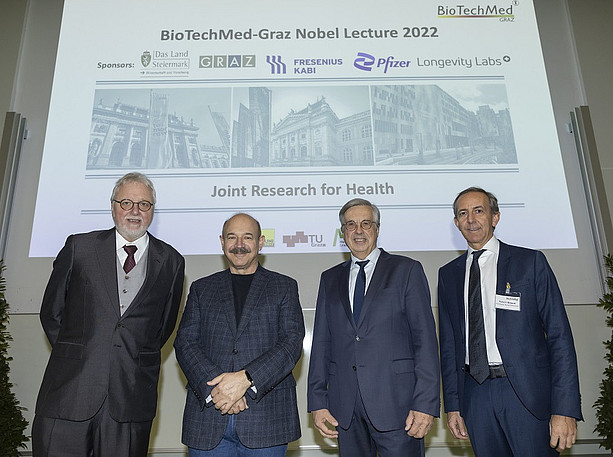
Prof. Bruce A. Beutler is an immunologist and geneticist and was awarded the Nobel Prize in Physiology or Medicine in 2011 for his discoveries on the activation of innate immunity.

The 2014 Nobel Prize in Chemistry was awarded jointly to Stefan W. Hell, Eric Betzig and William E. Moerner "for the development of high-resolution fluorescence microscopy".
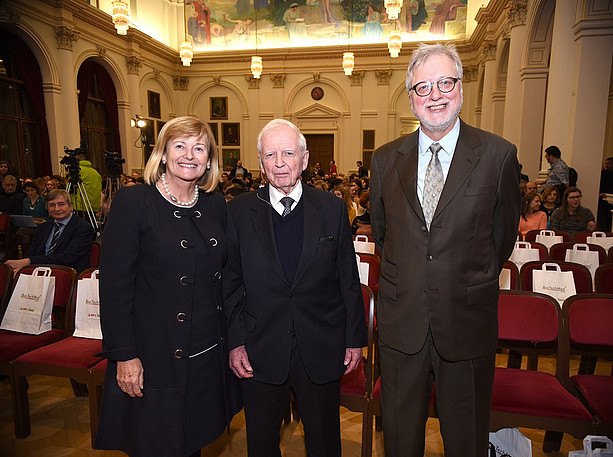
The internationally recognized researcher has contributed to the development of a vaccine against the most common type of cancer in women, cervical cancer. In 2008, the German scientist was awarded the Nobel Prize for Medicine.


